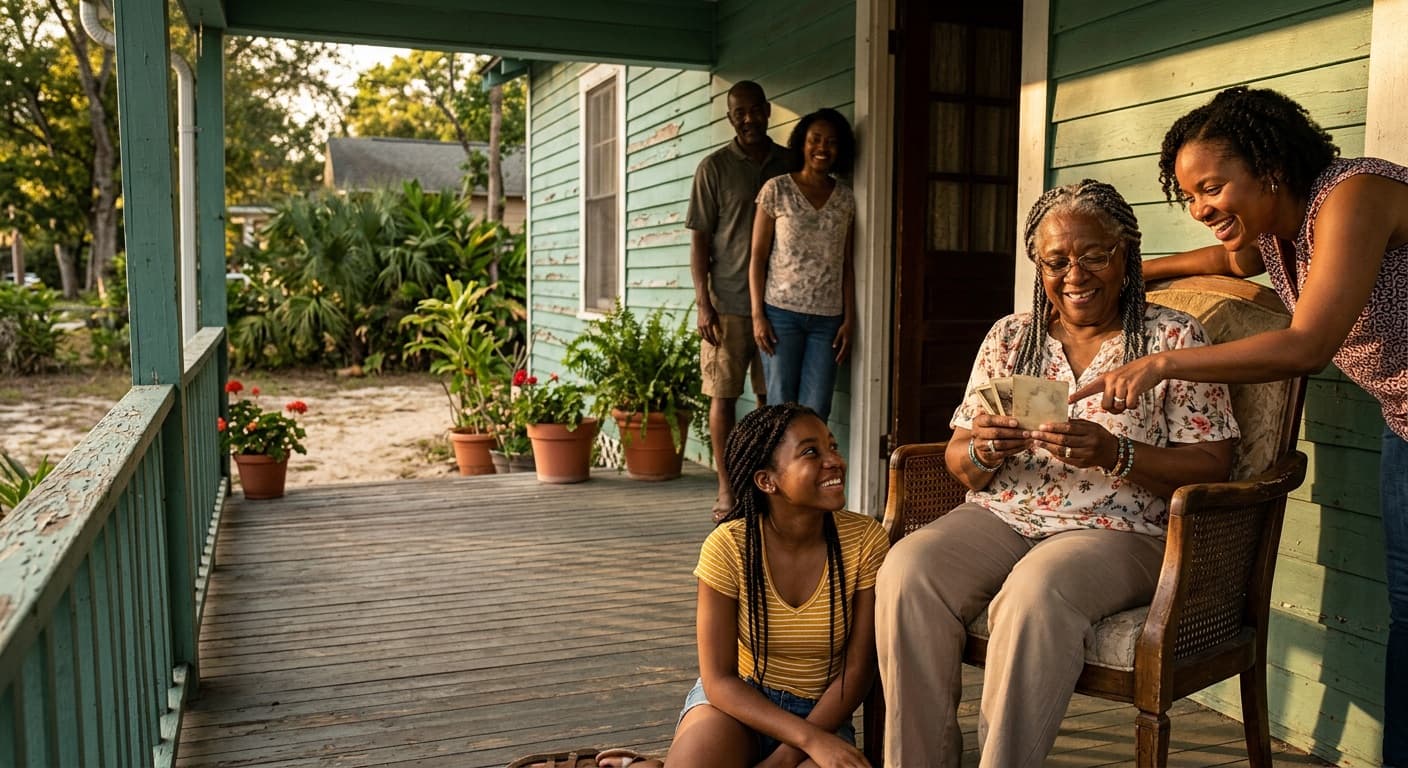
Antigua. Jersey City.
Atlanta.
One family tree.
Build it with the people who actually remember — your aunt, your godmother, the cousin with the shoebox — wherever they ended up. Everything they add shows up with their name on it.
- DB
- MB
- AB
Doreen added Ferdinand’s death date, from the program she kept.
2 minutes ago
This is the tree, not a picture of one
Laid out by the same engine the app runs, rendered on the server, and drawn in front of you. Four generations of an invented family, with the route they took written into where they were born.
Swipe the tree sideways to see the rest.
- Living — dates withheld here, exactly as they are from anyone outside the family.
- Sunrise and Sunset, the way a program states it.
- Where a couple’s children join the line.
Records stop.
Memory doesn’t.
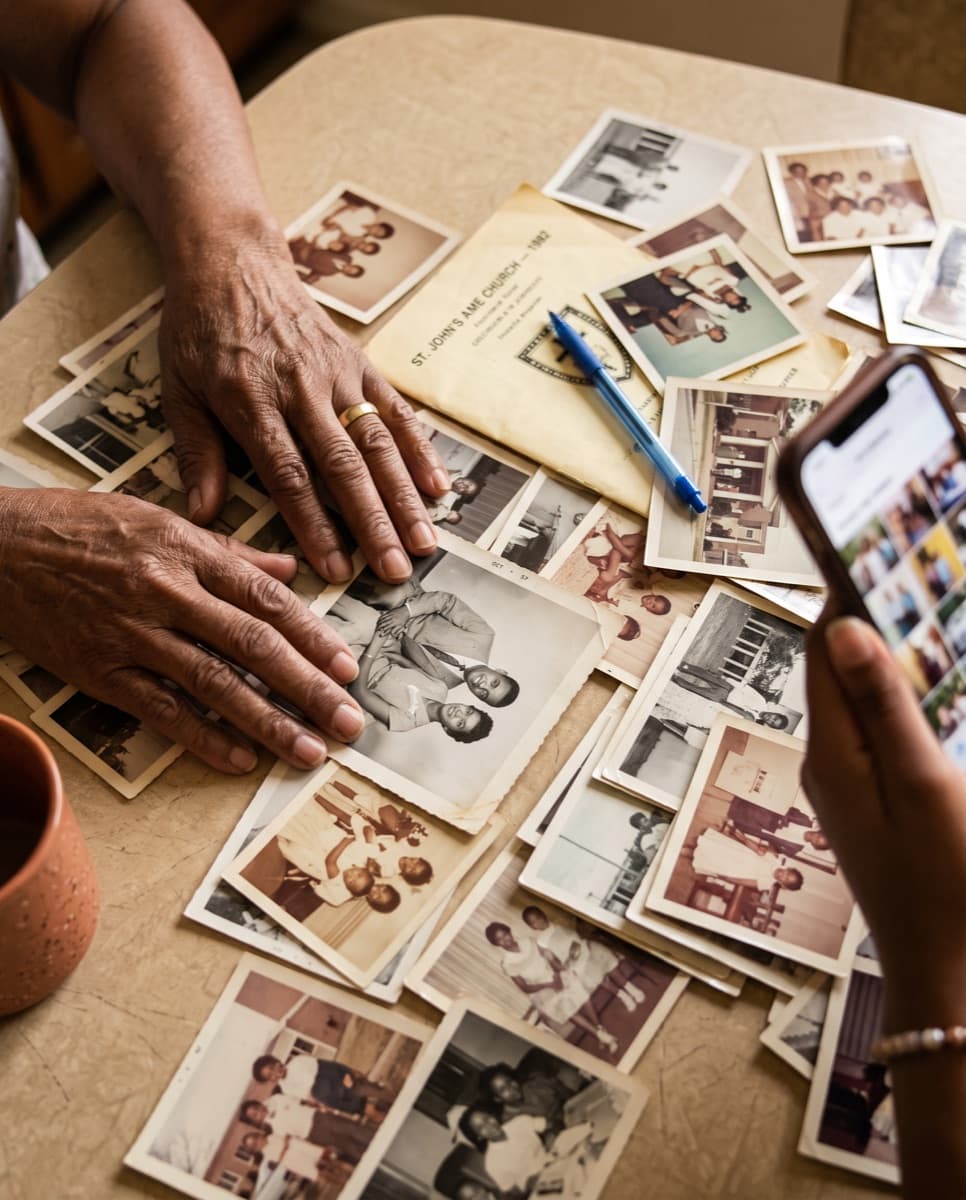
For most Black families in the United States the paper trail walls up around 1870 — the first census that recorded formerly enslaved people by name. For Caribbean families it scatters across parish registers, colonial archives, and four countries of migration. Nothing on a website changes that.
What’s on the other side of it lives in people, and people can be asked while they’re here.
- This is where what they said goes
- Most of what ends up in here comes out of somebody’s head, not an archive. That is the point, not a limitation.
- Every fact carries a name
- Who added it, and when. “Where did that date come from?” has an answer that isn’t a shrug.
- It isn't one person's login
- The relative who remembers the names is rarely the one who set up the account. Here they don’t have to be.
How it works
01
Start with you
One card. Add your parents, then theirs. Nothing has to be finished before you save it — a name with no dates is still a person.
02
Invite whoever remembers
Send a link to your aunt in Jersey City and your cousin in Walterboro. They can add people and stories, or just look — you choose which.
03
Watch it fill in
Every addition shows up on the tree and in the history, with the name of whoever added it.
Families this was built to hold
Two parent slots and a marriage date describe almost nobody. The database underneath this is an edge table, which means remarriage, adoption, a step-parent who did the work, and a father nobody recorded all store correctly instead of approximately.

Raised by her grandmother
Stored as the relationship it actually was, not squeezed into a parent slot that was never true.
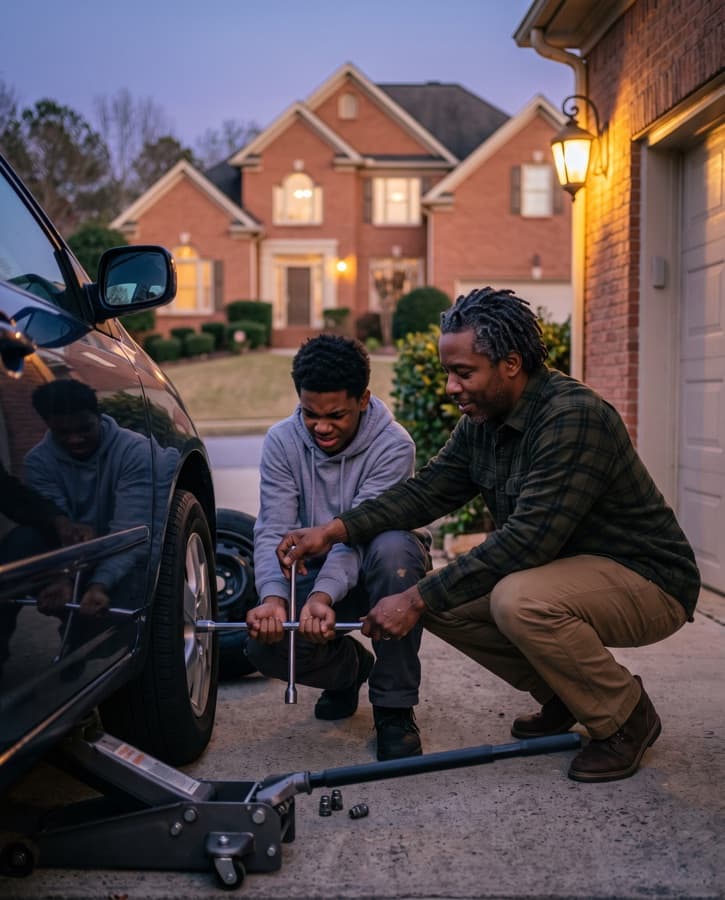
The stepfather who did the raising
Step, foster, adoptive and guardian are all first-class. The line is drawn differently. It is still drawn.

The whole reunion, on one tree
Some of them can edit, some can only look, and you decide which is which.
Your family already made this map
Antigua to Jersey City. Jersey City down to Atlanta. Then Atlanta and Walterboro trading children back and forth for two generations. Add where people were born and the tree draws the route your family actually took — no geocoder guessing at a place name, just where you put the pin.
Living relatives are counted on the map and never named.
Sample family. Real trees draw from the birthplaces relatives type in.
Every family has an understory.
A date is a fact. Why she left in March is the story. Both go in — and a story can say roughly when, if nobody is sure, without a form insisting on a day.
- Photographs get a caption, a date, and who’s in it — because the writing on the back is usually the only reason anyone knows.
- Every story records where it came from. “Aunt Cynthia told me this at the repast” is a source.
- Print the whole thing as a poster across several sheets when the reunion comes around.
Questions people actually ask
Who can see my family's tree?
Can I bring what I already have?
What if I'm not the tech person in the family?
What happens if I stop paying attention to it?
Can I get everything back out?
What it costs
Free while it’s new
$0
Every tree, every person, every relative you invite. No card, no trial running out, nothing to cancel. Sign up and start.
If that ever changes
You keep everything
Charging for something one day is a real possibility. Holding your family’s history hostage to it is not. You can export the whole tree as GEDCOM today, and you always will be able to.